Making of Made to Last (Apple Outfit)
An outfit made entirely of apples and wool — Learn more about the process behind the fashion sculpture made of apple leather, which is on display at the Vanitas exhibition at Museum LA8 in Baden-Baden.
A Game of Contrasts
Through its fragile materiality, the work Made to Last (Apple Outfit) subverts its title and the very idea of durability. The title is a reference to the slogan used in advertising to distinguish products from the abundance of items that are clearly not designed to last, but aiming to encourage quality- and sustainability-conscious customers to make a purchase. But why, on a planet with limited resources, isn’t everything designed to last? Ironically, the materials used in most disposable consumer goods (including fast fashion) are actually designed to last forever — in the shape of microplastics and toxic everyday chemicals like PFAS. Made to Last emerged from the decision to contribute a biodegradable fashion sculpture made of apples to the exhibition “Vanitas – The Beauty of the Transience”, rather than relying on industrial apple leather, which consists of at least 50% virgin plastic. The outfit’s design is based on functional garment patterns, yet their practicality is contrasted by the fragile material from which they are tailored. The piece also initiated the creation of a broader series of works that use apple leather to explore themes surrounding vanitas, consumerism, and nature. Some have already been completed, while others are currently still in production, such as a video work that documents the disintegration of an apple leather outfit in the rain in slow motion.
The Manufacturing Process on Video
Here is a video documenting the manufacturing process, from cutting the fabric to carefully sewing the pieces together by hand and finally installing the piece at Museum LA8.
Sketches of the jacket, the dress and the interplay of layers.
Making Apple Leather
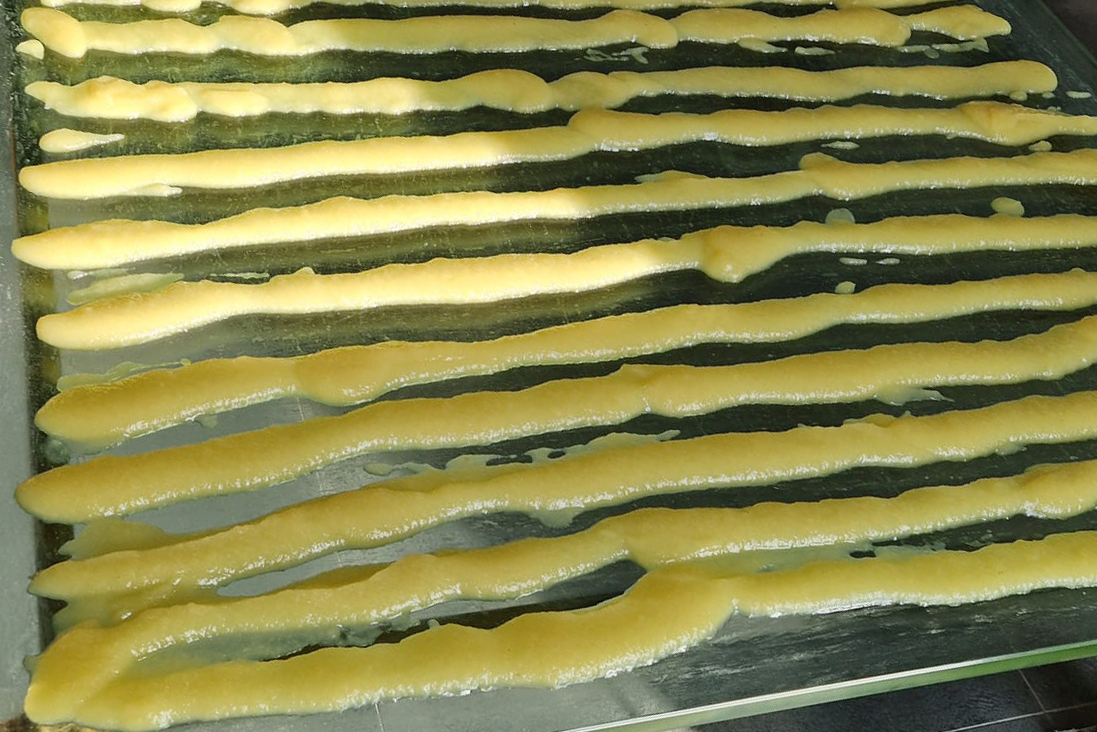
To make the apple-based biomaterial, apples are first simmered with a small amount of added sugar. Blending the mixture results in a homogeneous mass that can be spread evenly into a smooth layer. Once the apple leather has dried on a glass plate, it can be carefully peeled off.

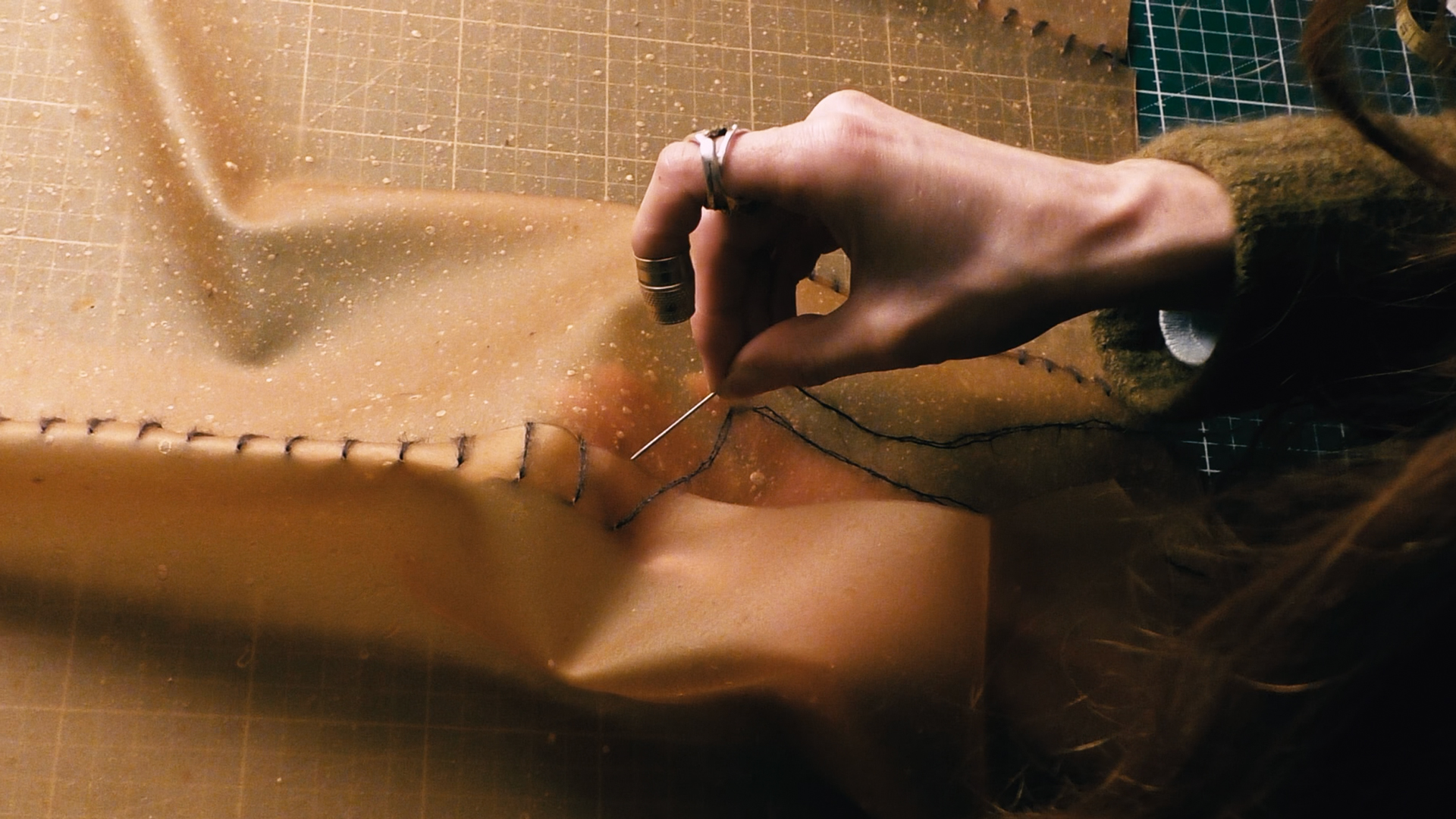
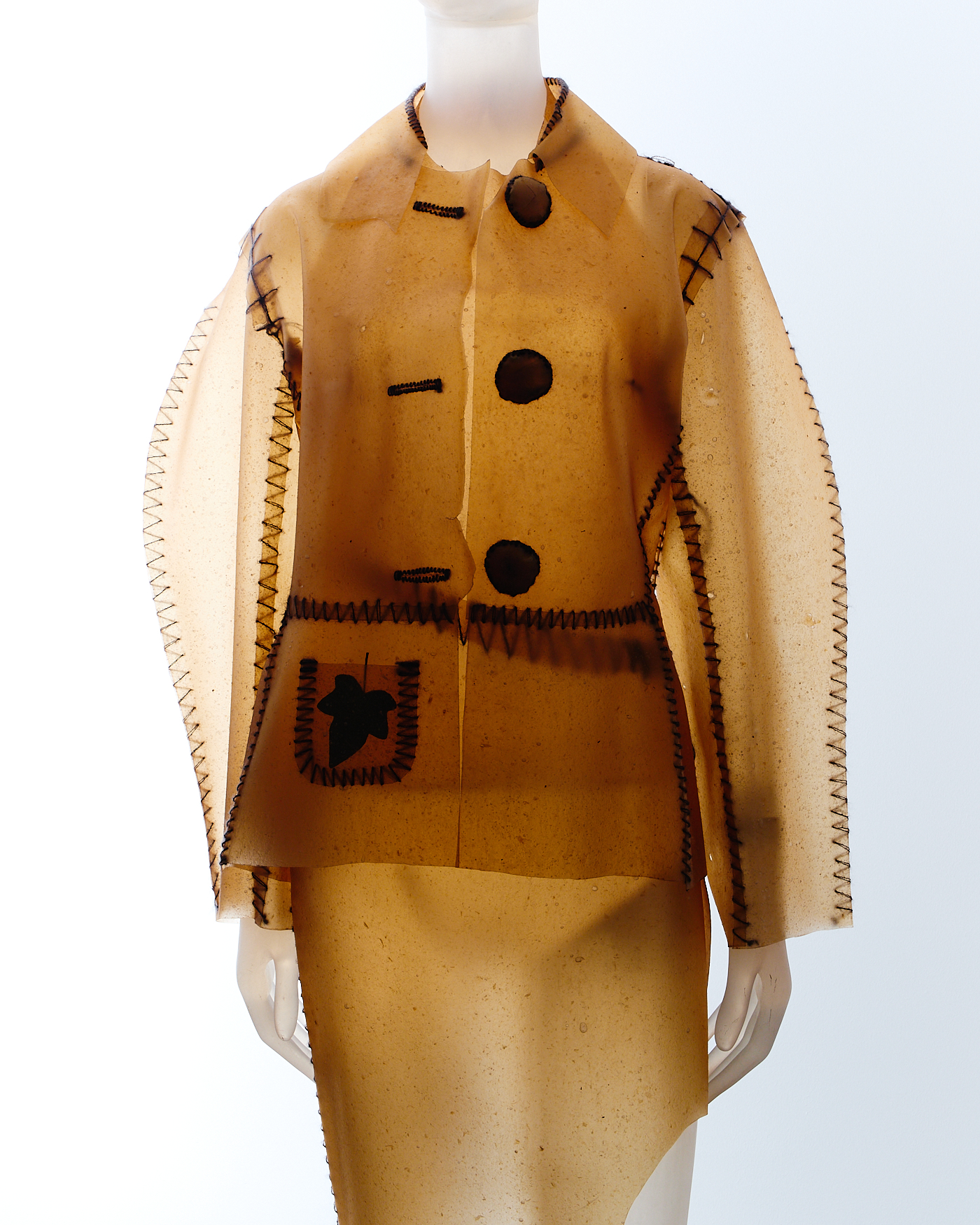
Working with apple leather requires a constant negotiation with its fragility. Initial sewing tests confirmed that it cannot be processed by machine under any circumstances, but must be sewn by hand. If the stitches are placed too close to the edge, the seam may tear.
Material Properties
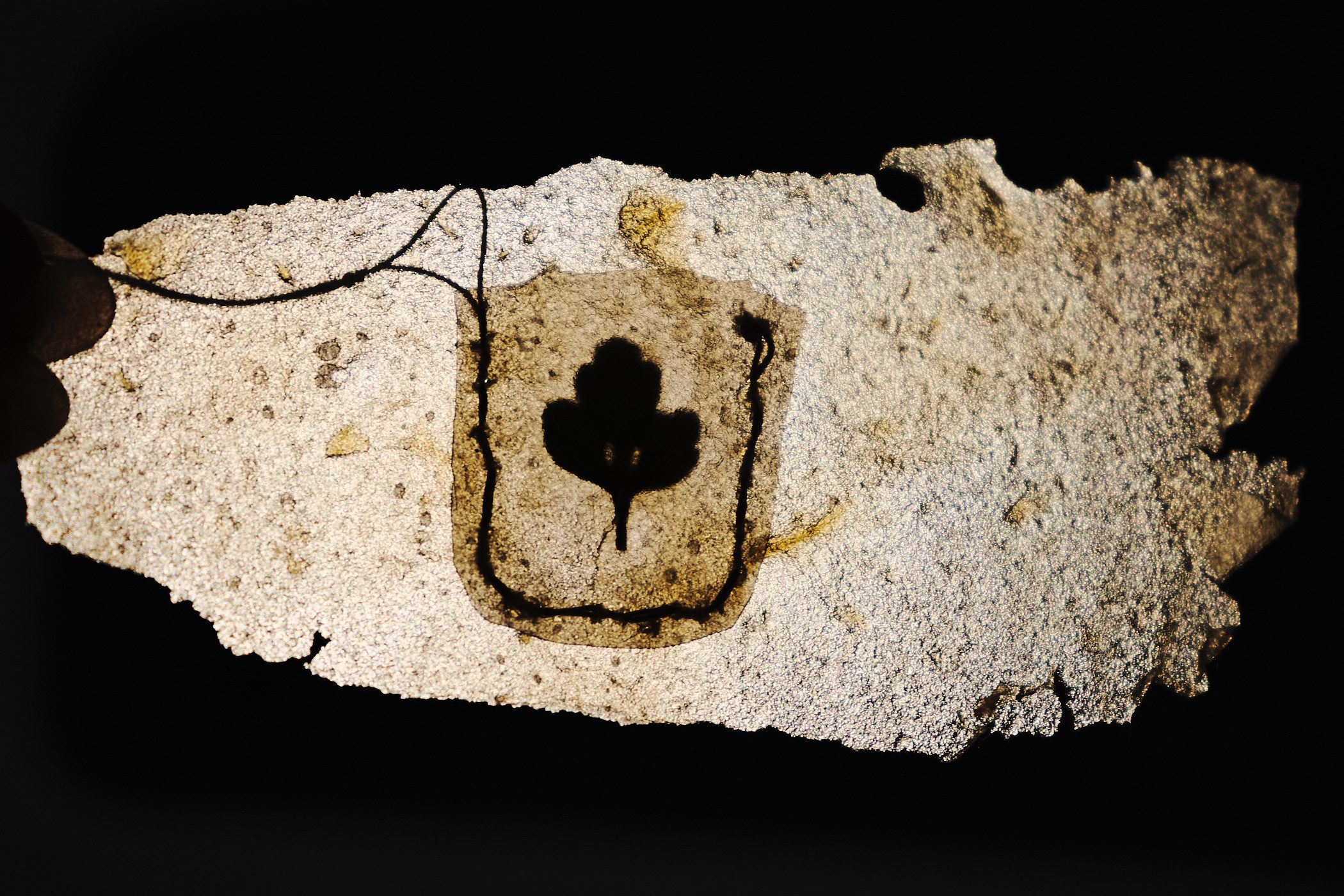
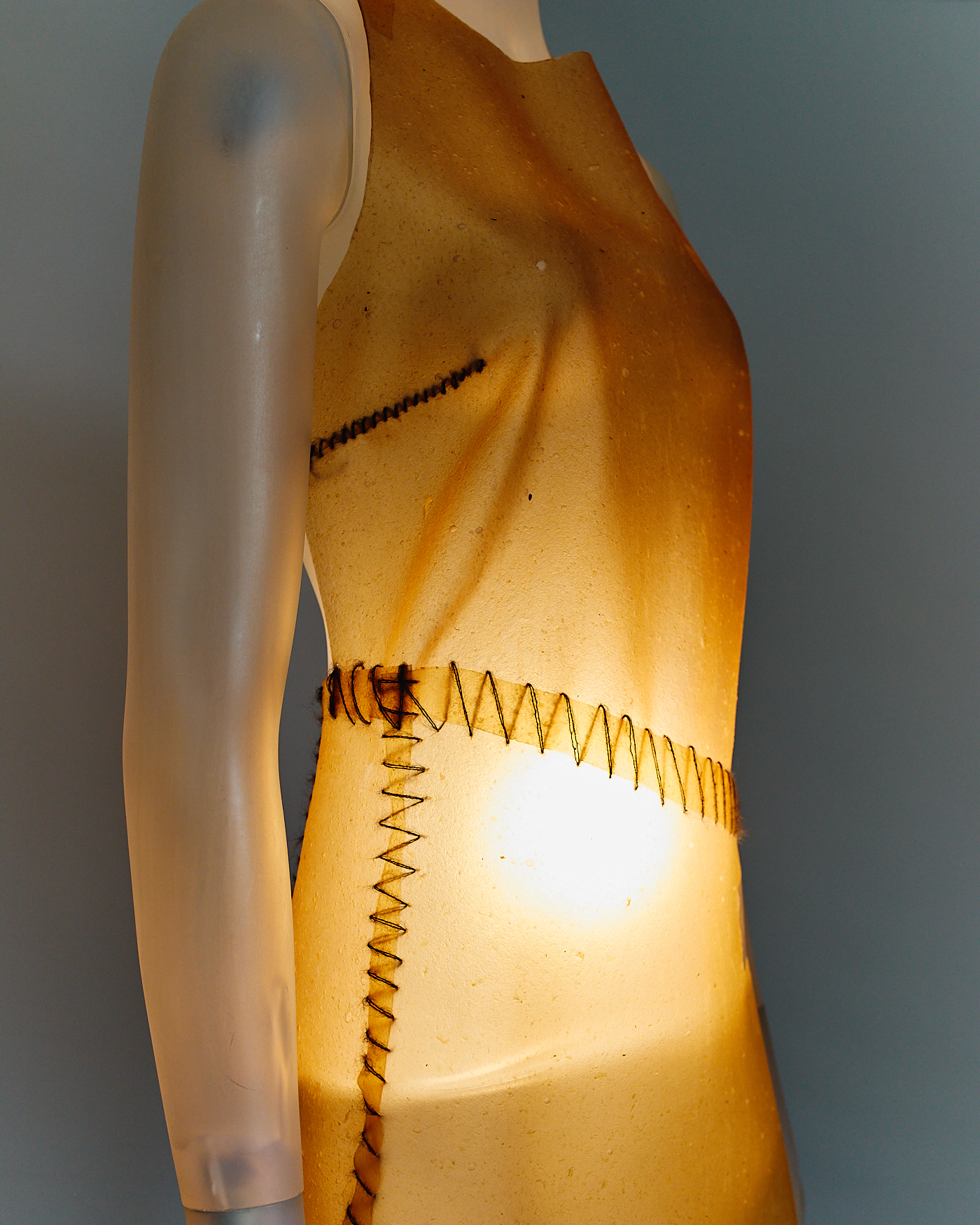
Apple leather has a slightly rough texture, is semi-transparent, and therefore lets light through. Like a second skin, it’s reminiscent of the remains of a snake that has shed its skin. Contours and details blur behind its organic surface. The pectin contained in the apple provides the necessary stability to shape it, yet working with this material requires care and patience. Every imperfection — small holes caused by air bubbles during the drying process or cracks where the material was subjected to excessive stress — bears witness to time, labor and the inevitability of decay.
Assembly: Hand sewing
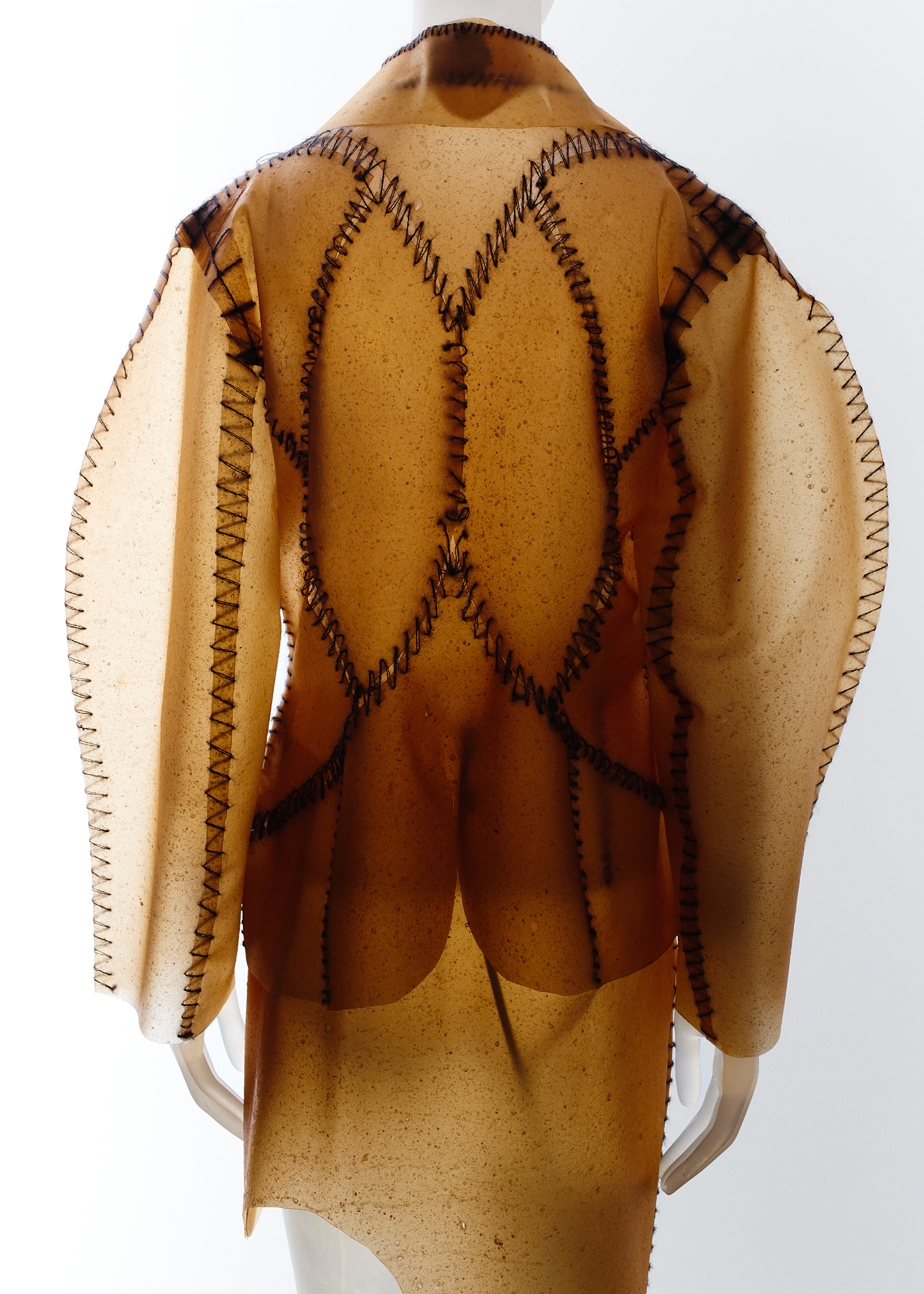
The back panel is composed of small fragments. The shapes were developed from those inside an apple core.

Most of the pieces were sewn together flat, in a horizontal position, to minimize stress on the material’s structure and ensure the seams didn’t bear the weight unevenly. Once the body of the jacket was finished to the point where the weight of the vest was distributed evenly across the mannequin, the three-dimensional shape made it easier to sew on curved elements, such as the collar or the sleeves.





Pattern Construction
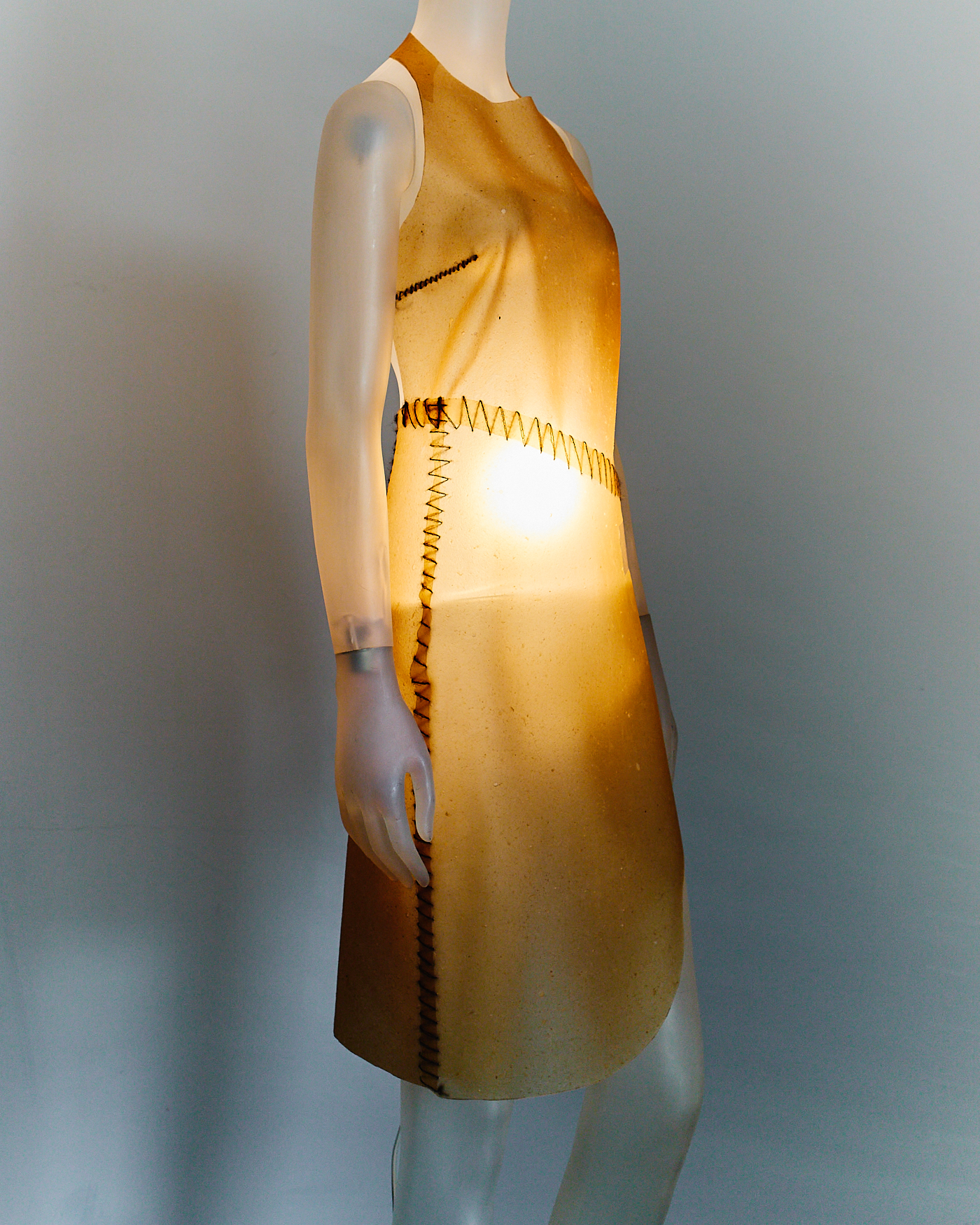
The complete illuminated apple leather outfit consists of a dress and a jacket. The dress was custom-made for the mannequin on which the outfit is displayed. Since it is held in place solely by a strap around the neck — and the weight of the material therefore cannot be distributed across the shoulders — the pattern is designed so that most of the weight rests on the hips, thereby preventing the neck strap from tearing. Because the dress had to be transported flat, Lary Rauh closed the skirt with a seam on-site during the exhibition setup.
The fashion sculpture Made to Last (Apple Outfit) in its space at Museum LA8.
Light and Shadow
Illuminated from within on a semi-transparent mannequin, the fragile beauty of the apple leather is accentuated: air pockets, remnants of the skin or core, as well as the soft fuzz of the mohair wool seams. Worn on a human body, the apple leather creates a play of shadows, draping itself like a layer of skin around the wearer and distorting the silhouette. More close-up photos can be found here.

Further Facets of the Theme
Decay – Made visible
For Decay, an iteration of the series, an apple-leather jacket was laid out in the forest near Lary Rauh’s hometown in the Black Forest and photographed daily by her to document its decay. This highlights the material’s properties and illustrates what would have been impossible with synthetic vegan leather. The daily ritual of visiting the same part of the forest was repeated until the jacket had completely disintegrated. The resulting photographs form a sequence that visualizes the process of decay.

Made to Last (Apple Outfit) is on view from 28 March – 20 September as part of “Vanitas – The Beauty of Transience” at Museum LA8 in Baden-Baden.
More from Lary Rauh: